
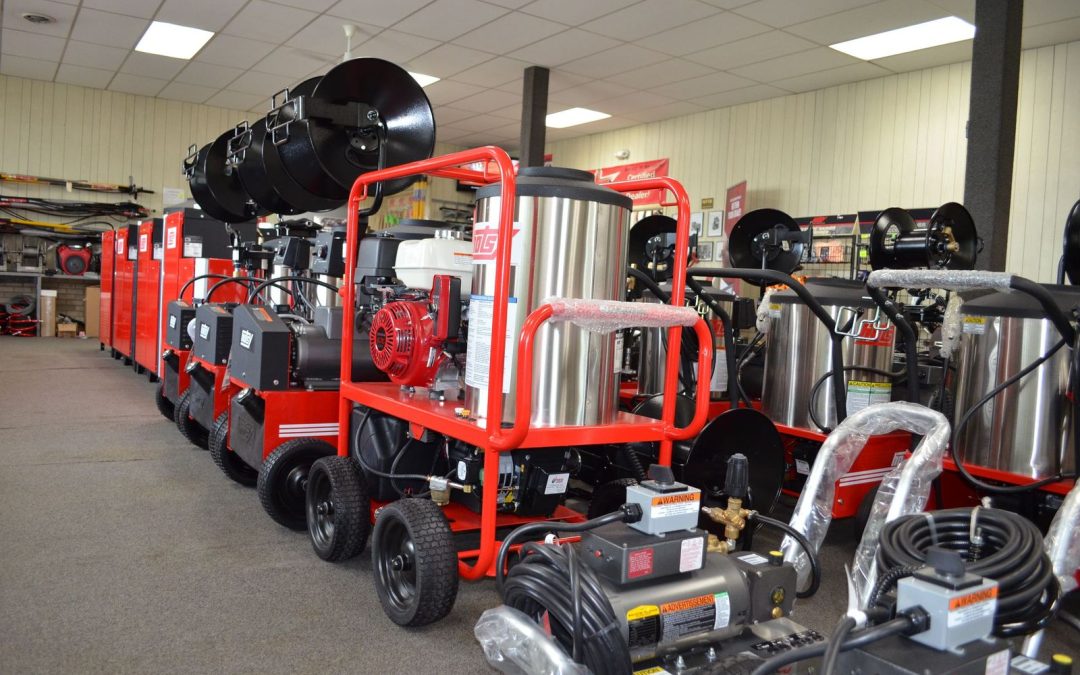
When it comes to keeping your business clean, professional, and safe, a standard garden hose simply won’t cut it. Commercial pressure washers are engineered to deliver the power, durability, and efficiency required for tough industrial cleaning tasks. Whether you manage a fleet of vehicles, maintain a large facility, or run a contract cleaning business, choosing the right pressure washer is critical to your success.
But with so many options on the market—hot water vs. cold water, gas vs. electric, and varying PSI ratings—how do you know which one is the best for your needs? In this guide, we’ll explore the top factors to consider when selecting the best commercial pressure washer for your business.
1. Cleaning Power: PSI vs. GPM
Many buyers focus solely on PSI (pounds per square inch), but that’s only half the story. The true measure of a pressure washer’s cleaning effectiveness is a combination of PSI and GPM (gallons per minute).
- PSI (Pressure): Determines the stripping power to lift dirt and grime from the surface.
- GPM (Flow): Determines how quickly the dirt is washed away.
For heavy-duty commercial cleaning, you need a machine that balances both. High PSI breaks the bond of the dirt, while higher GPM rinses it away faster, saving you valuable time on the job.
2. Hot Water vs. Cold Water Units
One of the biggest decisions you’ll make is choosing between a hot or cold water unit.
- Cold Water Pressure Washers: Ideal for removing dirt, mud, and loose debris. They are generally more compact and cost-effective. Perfect for cleaning sidewalks, siding, and vehicles.
- Hot Water Pressure Washers: Essential if you are cleaning grease, oil, or automotive fluids. Hot water cuts through grease like a knife through butter, making these units the industry standard for mechanics, restaurants, and industrial facilities.
3. Power Source: Electric vs. Gas vs. Diesel
The environment where you’ll be cleaning dictates the power source you need.
- Electric Models: Best for indoor use where exhaust fumes are a concern. They are quieter and require less maintenance but are tethered by a power cord.
- Gasoline Engines: Offer excellent portability and power for outdoor jobs. They are the go-to choice for mobile contract cleaners.
- Diesel Units: Built for maximum durability and heavy-duty, continuous use in industrial settings.
4. Mobility: Portable vs. Stationary
Do you need to move your pressure washer from site to site, or will it stay in a dedicated wash bay?
- Portable Units: Mounted on wheels or a skid, these are designed for flexibility. Great for contractors who travel to different job sites.
- Stationary Units: Installed permanently in a specific location, often with natural gas heating. These are ideal for wash bays in fleet maintenance facilities or factories.
5. Durability and Brand Reputation
A commercial pressure washer is an investment. You want a machine built with high-quality components—like ceramic plungers, brass manifolds, and industrial-grade motors—that can withstand daily abuse.
Look for brands with a proven track record of reliability and, just as importantly, accessible service and parts. A great machine is only as good as the support behind it.
The Verdict: What Is the Best Commercial Pressure Washer?
The “best” washer isn’t a single model; it’s the one that fits your specific application.
For grease and oil, a hot water gas or diesel unit is the clear winner.
For general dirt and facility maintenance, a cold water commercial unit may be all you need.
Need Help Deciding?
Don’t guess when it comes to your equipment. Our team of experts can help assess your cleaning needs and recommend the perfect commercial pressure washer for